
Jeffrey Miron
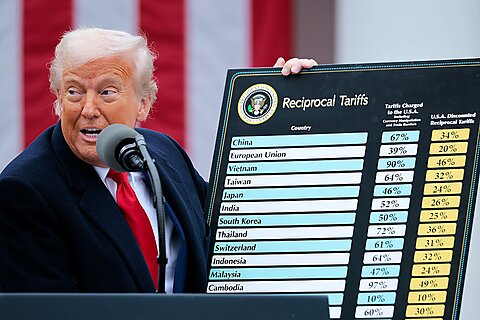
Reporters and economists alike spilled much ink predicting the effects of Trump’s “Liberation Day” tariffs. New analysis offers clarity on the actual impact of these tariffs.
First,
enacted policies remain much smaller than announced policies. This is a key reason why the price effects of the tariffs remain below many forecasts made in April 2025.
Second,
most of the incidence of recent US tariff hikes has fallen on US consumers. And given the significance of imported inputs in US manufacturing, domestic producers have also shouldered much of the burden.
Third, the tariffs have also
led to striking changes in sourcing patterns. … [For example, t]he share of Chinese goods in US imports collapsed from 22 percent at the end of 2017 to about 12 percent at the end of 2024.
Lastly, while
[e]conomic theory posits that increasing US import tariffs should appreciate the dollar … [it instead] depreciated significantly after the 2025 tariffs. … [This may be because] other policies and macroeconomic forces counterbalanced the effects of tariff hikes on the dollar exchange rate.
Cross-posted from Substack.