
Stephen Richer
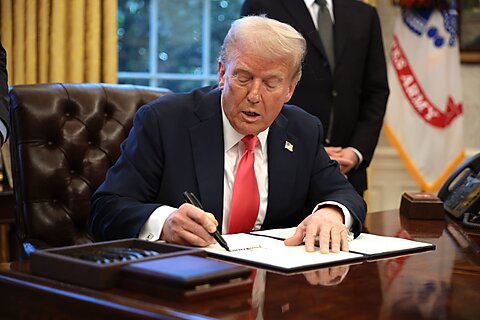
Political pundits have long-expected a second executive order from President Trump on election administration. Yesterday, March 31, it happened.
Titled, “Ensuring Citizenship Verification and Integrity in Federal Elections,” the order:
Directs the federal government to create a citizenship list that it “transmit[s] to the chief election official of each State… no fewer than 60 days before each regularly scheduled Federal election.…”
Directs the United States Postal Service (USPS) to require that mail ballots have an Intelligent Mail barcode.
Requires that states intending to use the USPS for mail-in voting notify the USPS 90 days prior to the federal election and requires states to send a mail-ballot recipient list 60 days prior to the election.
Various attorneys general and nonprofit organizations have already promised lawsuits, so this is by no means a conclusion to how the country will run elections in November. But a few interesting points:
Article 1, Section 4 of the Constitution delegates the “Times, Places and Manner of holding Elections” to the states. That section thwarted parts of the president’s previous executive order. This time, the president is trying to get around that limitation, choosing to dictate not how states run elections, but what the USPS does with ballots. However, as reported by the Associated Press, citing former Justice Department lawyer David Becker, “The U.S. Postal Service is run by a board of governors, and the president has no power to tell it what mail it can and cannot deliver.”
The executive order seems to freeze the mail-in voting list at 60 days prior to the election. In Arizona, where I ran elections, voters had until 11 days before Election Day to request a mail ballot. It seems that this executive order would prohibit election officials from using USPS to mail an election ballot to any voter who requests a mail ballot within 60 days of an election, even if state law permits it.
Section 2(b) of orders, where appropriate, “the prosecution of State and local officials or any others involved in the administration of Federal elections who issue Federal ballots to individuals not eligible to vote. … Similarly, the Attorney General shall prioritize the investigation and, as appropriate, the prosecution of individuals and public or private entities engaged in, or aiding and abetting, the printing, production, shipment, or distribution of ballots to individuals who are not eligible to vote in a Federal election.” Previously, if somebody unlawfully registered to vote, only that person was criminally liable. This seems to extend criminal liability to both election officials and ballot printers, even if they did not act knowingly or negligently. Many scholars at Cato have previously cautioned against criminal prosecution without a “mens rea” requirement.
More fundamentally, this executive order represents the Trump administration’s continued disdain for the “normal” way in which large changes are made to public policy—either by states or by Congress. President Trump is clearly frustrated with Congress’s inability to pass new election laws. He doesn’t interpret this as a mandate to go back to the legislative drawing board, but rather a license to legislate without Congress and without the states.
Stay tuned.