
Mike Fox
The courtroom is a solemn place, but the silence there is heavy. It’s the weight of a system refined over centuries, moving with a singular, crushing momentum. On one side of the aisle sits the State—an entity with limitless reach, a badge, and the power to undo a life with a single signature. On the other side sits a human being.
Today is National Public Defense Day, a moment to recognize the only thing standing in the gap between those two forces.
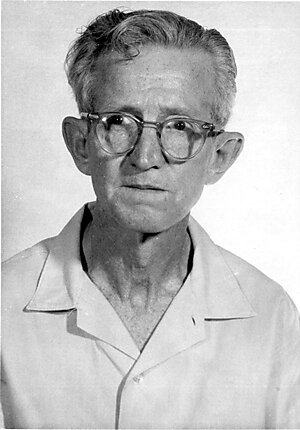
Sixty-three years ago, Clarence Earl Gideon—a homeless drifter with an eighth-grade education—saw a wrong and sought to right it. On his own volition, Gideon asked the US Supreme Court to hear his case. From that moment on, the Sixth Amendment right to counsel was finally given real meaning.
Having served as a public defender in Pueblo, Colorado—an impoverished old steel mill town where street drugs are often more plentiful than gainful employment opportunities—I’ve learned there’s something profoundly honorable about standing up for the “little guy” against the immense, coercive power of the state. Those who stand at the defense table alongside their destitute clients are often the most unpopular people in the room. To the casual observer, an evidentiary objection or a motion to suppress might look like a technicality or a delay tactic. But in a free society, those moments are among the only things holding back the slow creep of tyranny.
Tyranny doesn’t always arrive with fanfare; it arrives in the mundane shortcuts of a busy Monday morning. It’s found in the cases of individuals held over the weekend—often solely because they’re too poor to purchase their freedom—who finally get to see a judge and fight to go home to their kids or back to work. It’s found in a standard bail schedule that ignores a person’s individual circumstances. If the government is allowed to take a shortcut to a conviction today, those shortcuts become the new road tomorrow. We’ve already seen plea-driven mass adjudication displace the constitutionally prescribed mechanism for judging criminal cases—the citizen jury trial.
The job of a public defender is to be the friction in that machine—to disrupt business as usual. Dedicated defenders seek to restore the Framers’ ideal: that depriving a human being of their liberty should be arduous and costly, rather than easy and cheap as it is today. Defenders force the state to meet its evidentiary burden.
The Framers envisioned the criminal justice system as a place of last resort. But today, we’ve gotten dangerously good at locking up those we’re mad at while failing to restrain those we’re afraid of. The result is jails and prisons bursting at the seams with the wrong people, while clearance rates for serious crimes plummet. This leaves violent criminals free to offend again, while public defenders are left to pick up the pieces of those the system opted to target instead.
To sit next to someone who has the entire weight of the government pressed against them is a heavy burden. You feel the physical gravity of their fear. In that chair, public defenders are the last line of defense—the final barrier between a citizen and the absolute power of the state.
We’re taught that the Constitution is our shield, but a shield is just a piece of metal until someone has the courage to hold it up. Without a dedicated advocate to push back, to question, and to demand dignity for the accused, our constitutional rights are just ink on a page. Public defenders give those words meaning. They remind the state that it cannot simply steamroll over a human life because it’s convenient or efficient to do so.
If public defenders don’t fight for the person the world has already written off, our rights become meaningless. The strength of our republic isn’t measured by how we treat the powerful; it’s measured by how we treat those least positioned to fight back.
If you think you’d never be a criminal defendant, I invite you to think again. In a world where there are over 5,000 federal statutory crimes and some 400,000 regulatory crimes alone, we’re all essentially unconvicted criminals. I’m one dog walk on Supreme Court grounds away from a federal courtroom and 60 days in jail.
I got into this line of work because, as a libertarian, I question authority. Criminal courtrooms are where constitutional rights clash with state power and policing prerogatives. I believe that the government must always be challenged. And I know that power, left unchecked, will always expand until it finds a limit.
Today, and every day, public defenders are that limit.